


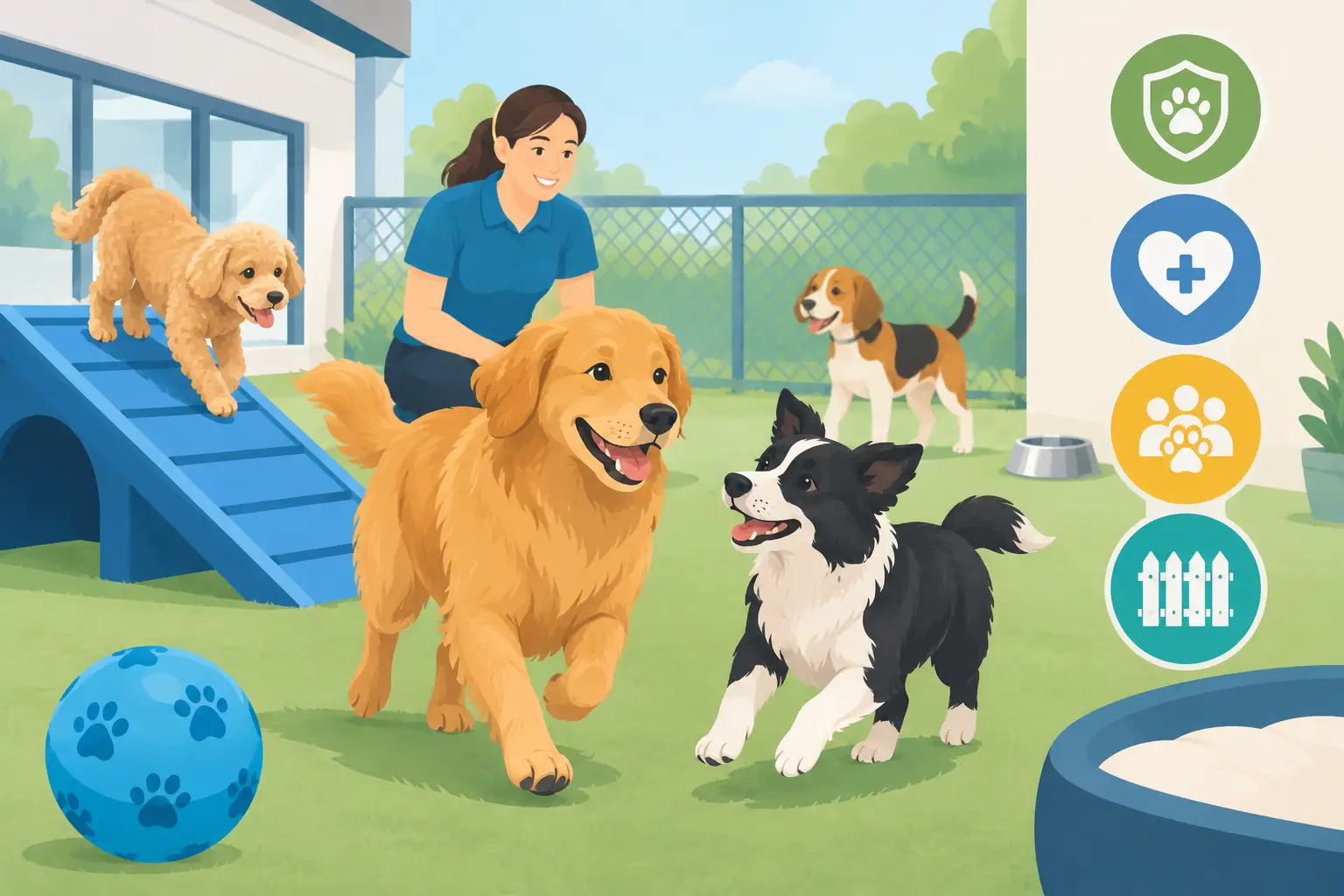
What to Look for in a Safe Doggy Daycare

A tired dog at the end of the day can be a wonderful thing. A stressed, overstimulated dog is not. The difference often comes down to how a doggy daycare understands the individual dog behind the leash: their play style, energy level, comfort around other dogs, and need for rest.
For busy households in Northeast Columbus, daycare can provide dependable supervision while work, commutes, appointments, and family schedules move forward. But quality care is more than a place where dogs spend time together. A well-run program gives dogs opportunities to play, rest, communicate, and feel secure within a routine built for them.
A Doggy Daycare Should Start With an Evaluation
No responsible provider should assume that every dog will enjoy group care in the same way. Dogs may be friendly and still need a slower introduction. A puppy may be eager but still learning social boundaries. An adult dog may love a few familiar companions while finding a large, fast-moving group overwhelming.
That is why individual evaluations matter. Before a dog joins daycare, the care team should learn from the owner, observe the dog’s body language, and introduce them to carefully selected dogs. A personal conversation can reveal helpful details that are easy to miss in a quick drop-off: whether a dog guards toys, needs time to warm up, becomes vocal when excited, or has a favorite way to settle.
A thoughtful intake often includes a meet-and-greet, staff evaluation, and selected introductions before a trial daycare day. This process takes more time than placing a dog directly into a playroom, but it helps create safer, more compatible groups. It also gives owners a chance to see whether the facility asks specific questions about their dog rather than offering one generic experience for everyone.
Compatible Groups Matter More Than Group Size
Many owners naturally ask whether dogs are grouped by size. Size can be one consideration, but it is rarely the whole picture. A gentle large dog may be a better match for a calm medium-sized dog than for a high-energy dog of the same size. Play style, confidence, age, communication, and activity level all influence whether a group feels comfortable.
Compatible groups allow staff to respond before tension builds. Dogs who enjoy chase games may need a different environment than dogs who prefer calm sniffing, parallel play, or a few short interactions before taking a break. Puppies may need more coaching and rest than adolescent dogs, while senior dogs may appreciate a quieter pace.
The goal is not constant action. The goal is a day that feels manageable and rewarding for each dog. When a daycare treats social compatibility as an ongoing decision, groups can change as a dog matures, builds confidence, or shows a preference for a different play style.
Play Needs Structure and Rest
A good daycare day includes movement, engagement, and social time, but it should also include structured downtime. Dogs do not always choose rest when exciting things are happening around them. Like overtired children, they can become more reactive, less coordinated, or unable to settle even when they need a break.
Scheduled rest periods give dogs a chance to reset. They support emotional regulation, reduce the pressure of nonstop social interaction, and help dogs return to play with better focus. For some dogs, a short quiet break is enough. Others may need more time away from a group or a slower day overall.
Indoor and outdoor play areas can also serve different needs. Outdoor time offers fresh air, room to move, and natural opportunities for exploration. Indoor space provides a controlled environment when weather changes or when a dog needs a more contained activity level. What matters is not simply having both spaces, but using them intentionally with appropriate supervision.
Ask How Dogs Are Supervised
Staff presence is one of the clearest signs of a daycare’s care standards. Dogs need attendants who are actively reading the room, not merely standing nearby. Early signs of discomfort can be subtle: a dog turning away, freezing, repeatedly seeking an exit, mounting, escalating vocalization, or interrupting play without recovering.
Attentive staff recognize when a play group needs a pause, when two dogs need space, and when a dog is ready to rejoin after a break. Low dog-to-attendant ratios make that observation more realistic. If one person is responsible for too many dogs, individual behavior can be missed until it becomes a problem.
Owners should feel comfortable asking practical questions. How are groups monitored? What happens if a dog appears overwhelmed? How are conflicts handled? Is there a plan for dogs who are not comfortable in a group on a particular day? Clear answers are reassuring because they show that safety is a daily practice, not a promise on a brochure.
Health Standards Protect the Whole Community
A daycare community depends on every family doing their part. Vaccination requirements, parasite prevention expectations, and policies for illness help protect dogs, staff, and other visiting families. A responsible provider should explain its health standards clearly and consistently.
It is also helpful to ask how the facility handles coughing, stomach upset, injuries, or changes in behavior. No shared-care setting can eliminate every health risk, but a thoughtful response plan can limit exposure and keep owners informed. Transparency matters here. You should know when your dog is having an unusually quiet day, declining food, or showing signs that they may need attention at home.
If your dog is recovering from an illness, surgery, or an upsetting life change, daycare may not be the right choice immediately. The best decision depends on the dog. A trustworthy provider will be willing to discuss whether a gradual return, a quieter schedule, or time at home makes more sense.
Routine Helps Dogs Feel at Home
Dogs thrive when they can predict what comes next. A familiar drop-off routine, regular rest breaks, consistent staff guidance, and recognizable play companions can make daycare feel less like a busy event and more like part of a dog’s week.
That consistency is especially valuable for working professionals and commuting households. You can leave for the day knowing your dog has supervision, activity, and a place to rest rather than spending long hours alone. For active families, daycare can also provide an outlet on days when schedules do not allow for the usual walk, park visit, or backyard time.
Still, daycare does not need to be an every-day arrangement for every dog. Some dogs enjoy two or three visits each week. Others benefit from a more regular schedule. Younger dogs may need shorter or less frequent days while they learn how to handle group environments. Paying attention to your dog after daycare is useful: are they pleasantly relaxed, eating normally, and eager to return? Or are they unusually anxious, exhausted, or reluctant at drop-off? Their behavior offers important information.
Consider Care Beyond the Daytime Hours
For families who travel, an established daycare relationship can make overnight care feel more familiar. Dogs who already know the staff, space, and routine may have an easier time boarding than they would in a completely new environment.
Ask how overnight care is staffed, what the evening routine looks like, and whether daytime activities are adapted to the dog’s established group-care suitability. Continuous onsite employee coverage offers added reassurance, especially for owners whose dogs need overnight observation or simply settle better knowing people are nearby.
At AOKO Dog Daycare and Boarding, the same relationship-based approach used for daycare supports boarding decisions. Dogs are treated as individuals, and their daytime routine is tailored around their needs, energy, and comfort in group care.
The right daycare should leave you with more than a worn-out dog at pickup. It should give you confidence that your dog was noticed, guided, given time to rest, and welcomed as part of a carefully cared-for community. Requesting a meet-and-greet is a simple next step that lets both you and the care team decide whether the environment feels like the right fit.
Comments